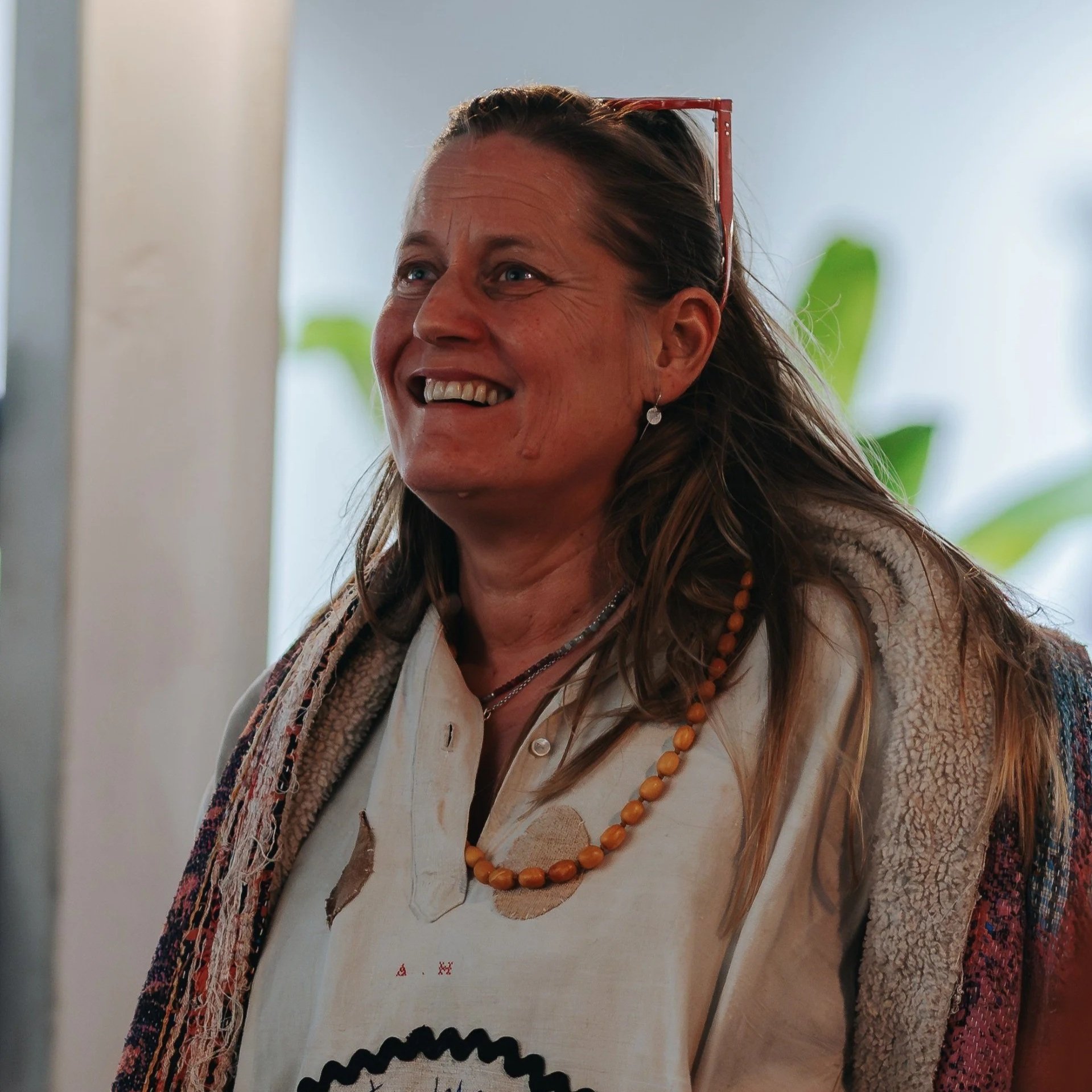
Katie GoddenGreen
Affilliation: University of Plymouth
Katie is an artist with a commitment to making. Her practice is rooted in the Cornish landscape that she refers to as The Parish of Milk—an imagined and non imagined rural domain. The Parish holds almanacs, rituals, and the “left-behind” wonder of past times. Through storytelling, she gathers and reworks seasonal narratives, stitching them onto vintage linen smocks, shaping them into pottery sculptures, carving them into woodcut prints. These slow, material-led processes treat craft as both method and meaning. With 20 years as a secondary school Art teacher, Katie is looking to further her career post MA in higher education
Panel: Frolic, Misrule, and Creative Chaos
This presentation examines the role of folklore within my contemporary fine art practice through the framework of William R. Bascom’s Four Functions of Folklore—amusement, cultural validation, education, and the maintenance of social norms (Bascom, 1965). Using this structure as a critical lens, I consider how folkloric practices operate within socially engaged art not as nostalgic reference, but as an active and evolving cultural system.
Situated within the small world of The Parish of Milk, my performative and textile-based practice draws upon rural community participation, seasonal cycles, and place-based inquiry. Responding to a growing disconnect between young people and seasonal awareness, the work reactivates ritual as a means of ecological and cultural re-ettunement, through humour, costume, and storytelling.
Particular attention is given to the Frolicksome Frock rituals and the carnivalesque, informed by Mikhail Bakhtin’s theorisation of carnival (Bakhtin, 1984), alongside the archetypes of the fool and trickster. These figures destabilise hierarchy, invite collective play, and enable reflection through laughter, resonating with ritual processes of liminality and communitas. Addressing tensions between preservation and transformation, the presentation argues that folklore - including superstition, oral tradition, and ritual repetition - offers a dynamic methodological framework through which contemporary art can sustain inherited practices while contributing to their reconfiguration. In doing so, it proposes folklore as a living system through which communal wellbeing and seasonal awareness can be rehearsed in response to ecological and cultural change.
Bascom, William R. (1984) ‘The Forms of Folklore: Prose Narratives’. The Journal of American Folklore, 78(307), pp. 3–20.
Bakhtin, Mikhail (1965) Rabelais and His World. Indiana University Press.