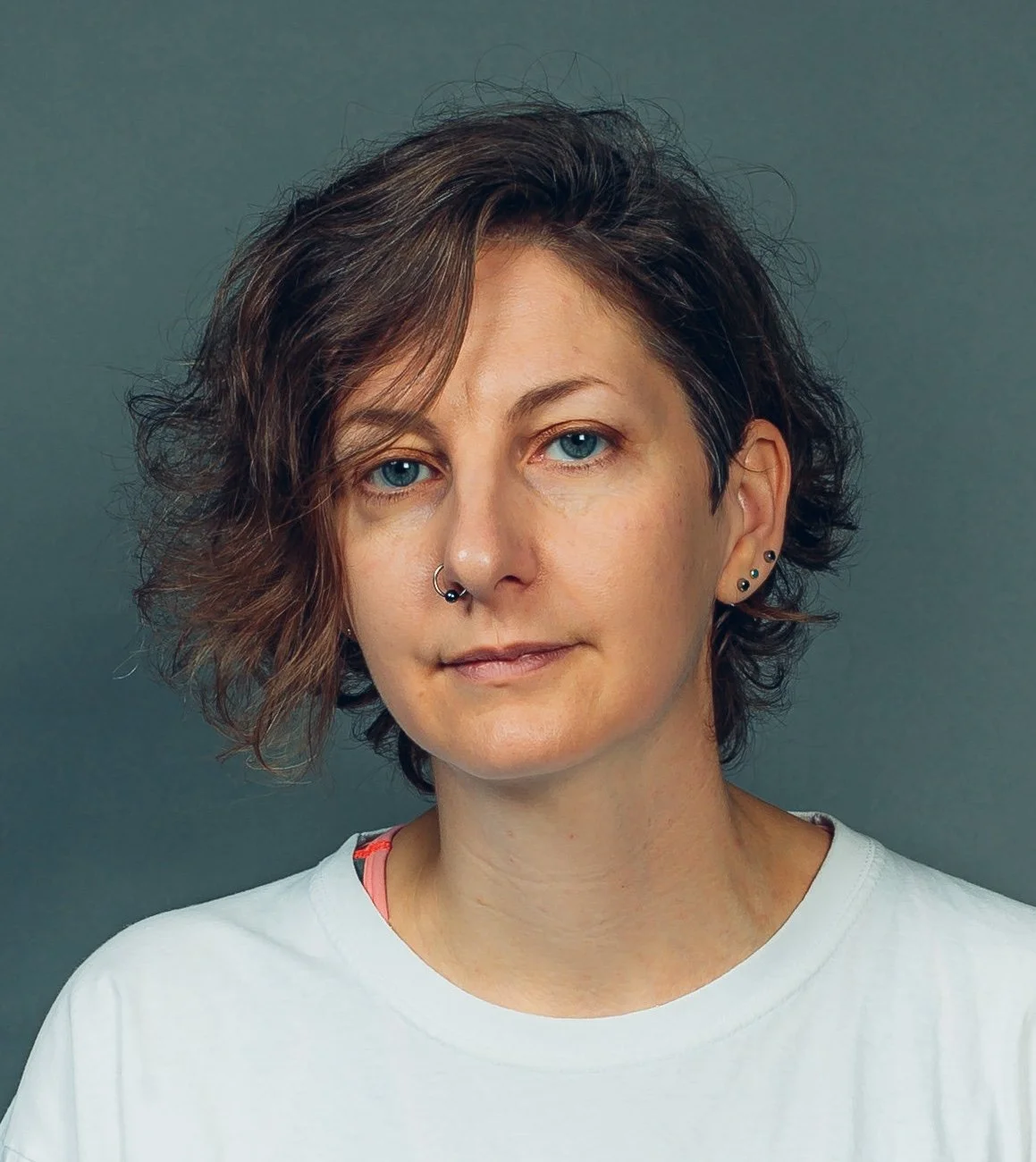
Stephanie Cussans Moran
Affiliation: Faculty of Fine Arts at Brno University of Technology / Fakulta výtvarných umění (FaVU), Vysokého učení technického v Brně
Dr Stephanie Cussans Moran is an artist and cross-disciplinary researcher. She developed the Solar Goddess project during a painting Fellowship at Brno University of Technology, Czechia. She earned her AHRC-funded PhD in Transtechnology Research across the fields of literary theory and animal studies, investigating human visual bias in representations of other animals. Dr Cussans Moran has also held doctoral and postdoctoral fellowships at the Smithsonian’s National Museum of Natural History in Washington DC and RIFS (Research Institute for Sustainability) in Germany. She is currently writing her first book, The Female Octopus, which examines the representation of octopuses in science fiction.
Panel: Experimental Archeaologies
Talk Title: 'In Search of the Solar Goddess: reimagining Minoan (Bronze Age Cretan) ritual for ecological wellbeing practices'
The Minoan (Bronze Age Cretan) “labyrinth” at Knossos was an early urban prototype whose solar and astral architecture oriented towards both the solstice sunrise and the rise of the star Spica. Astral rituals of light and dark at Knossos were (contestedly) thought to have been presided over by a Minoan solar goddess who ruled the earthly daylight lands and the sunlit underwater afterlife. This presentation discusses the embodied, imaginative and ecological psychological approaches taken in a series of paintings based on archaeological research about the Minoan solar goddess and the site at Knossos. It aims to show how artistic practice can speculatively reenact environment-specific rituals performed in and through architecture, symbolism and artefacts, in order to reconsider them as ecological wellbeing practices.
In this, it draws on the concepts and visual analysis of three archaeologists: Nanno Marinatos’ syncretic analogical analysis of Minoan symbolism (2010); Věra Klontza-Jaklová’s comparative analysis of Bronze Age Cretan and Central European symbolism (2018); and Ute Günkel-Maschek’s notion of the “Bild-Raum”, or image-space, as a key for understanding how image and symbolism functioned within ritual at the Knossos site (2012, 2020). Painting is here understood as a visual medium in the ecological psychological sense, where vision is an inseparable part of an interconnected perceptual system (Gibson 1979). This paper argues that visual arts offer means of mediating and contextualising embodied engagements with/in environments, to reimagine concepts and models for new, ecologically-based wellbeing practices.