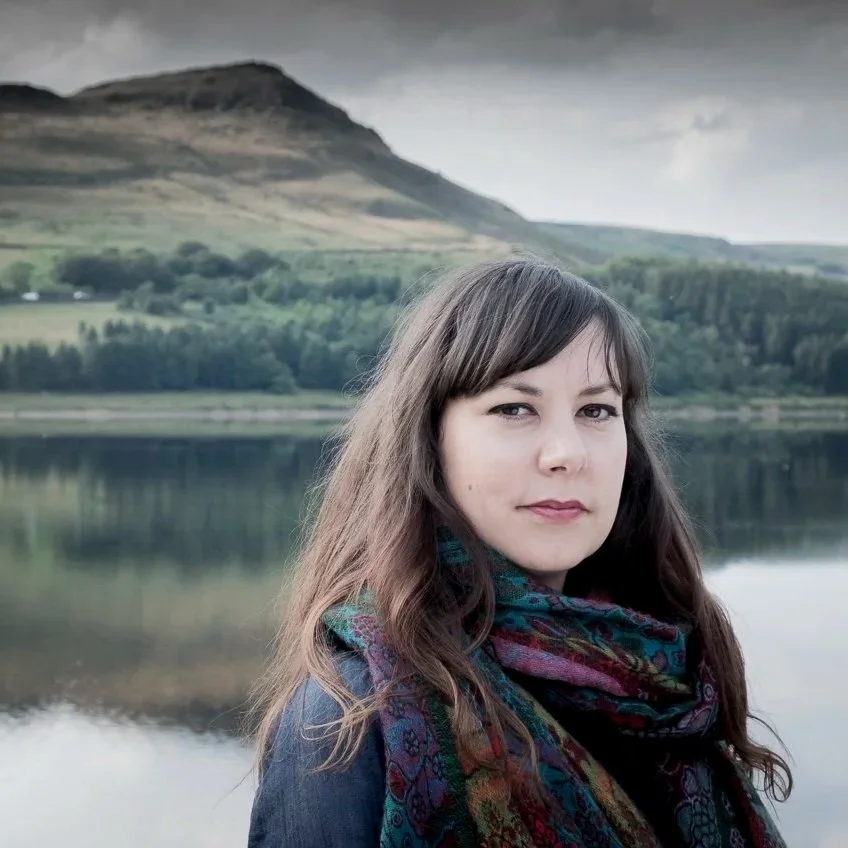
Sophie Parkes-Nield
Affilliation: Sheffield Hallam University
Sophie Parkes-Nield is a postdoctoral researcher on the AHRC-funded National Folklore Survey for England project (nationalfolkloresurvey.co.uk). She completed her PhD in 2024 at Sheffield Hallam University where she is an Associate Lecturer in Creative Writing. A book based on her thesis is currently under contract from University of Exeter Press. She also teaches Creative Writing at Leeds Arts University. Writing as Sophie Parkes, her debut novel, Out of Human Sight, was published in 2023. sophieparkes.co.uk
Panel: Writing Ourselves into the Land
Talk Title: It belongs to us all: considerations of creative writing with folklore
Folklore has long provided inspiration, intrigue and source material for creative writers, but should we consider how – and why – we work with it?
Based on insights from both her chapter in The Routledge Handbook on Heritage and Creative Practice (2025) and her practice-based PhD, Dr Sophie Parkes-Nield’s paper examines intangible cultural heritage, specifically the calendar custom, and the ethics of its representation in fiction. She argues that folklore, as self-expression of an individual or community, what the American Folklore Society terms ‘cultural DNA’ (2026), should be handled by the creative writer with the same sensitivity and consideration as religiosity, class, and other cultural influences that could be considered deeply personal and idiosyncratic.
This notion was developed following qualitative research she conducted for this study with individuals from the host communities of calendar customs who expressed the significance of these customs for themselves and their wider communities.
Once Parkes-Nield traced and analysed how contemporary writers present calendar customs in their writing, and viewed these through the perspectives of real-world informants, she was able to develop her own presentation, which evolved to become her novel, Thankstide. Here she eschews the popular folk horror trope of the calendar custom as macabre and insular, instead seeking to demonstrate how meaningful yet everyday the calendar custom can be, both for fictional and real-world communities. The paper concludes with provocations for writers seeking to work with these folkloric events.