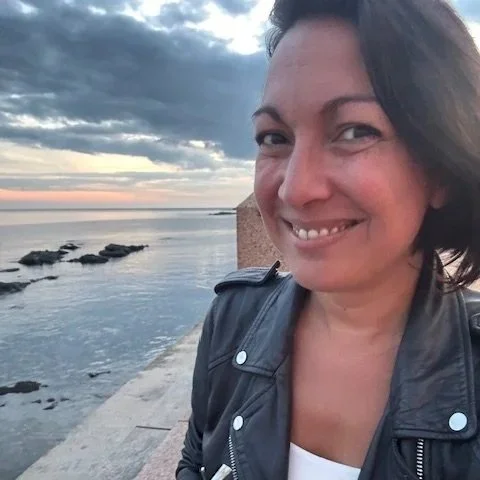
María Verónica Laguna
Affilliation: Private Practice
María Verónica Laguna is a psychoanalytic psychotherapist, educator, and clinical supervisor based in Uruguay. With over a decade of clinical and social work experience in New York City, she worked in transitional housing, outpatient clinics, and private practice. She lectures internationally on Social Work, Critical Psychology, migration, and intersectionality. Founder of The Bicultural Collective and curator of Psychoanalysis and Social Justice, she supports bicultural individuals and clinicians at the intersection of practice and activism. She has authored chapters on immigrant self-states (Nomos Verlag, 2025) and Ferenczi’s psychoanalysis in dialogue with Critical Psychology (INM Editora, forthcoming)
Panel: Re-Enchanted Landscapes
Placemaking is an inherent aspect of human life, it occurs through our everyday practices, every time we interact with, restore, transform, and maintain physical spaces.
For migrant communities, the act of placemaking can have a much deeper meaning: it can transform urban and peripheral landscapes into spaces of belonging. As Relph (1993) reminds us, place is “a territory of meanings,” continually resignified through everyday practices of restoration, transformation, and maintenance. This presentation examines several studies of diasporic placemaking across New York, Los Angeles, Rome, and Montevideo, highlighting examples where displaced workers and artists mobilize storytelling, ritual, and embodied practice to resist erasure. From las casitas in the Bronx to migrant women’s soccer teams on the outskirts of Rome, these interventions demonstrate how diasporic creativity negotiates belonging across contested landscapes.
Placemaking in these contexts fosters social inclusion, solidarity, and resilience, challenging hegemonic notions of who “belongs” in public space. It functions simultaneously as defiance and care: opening dialogic spaces, commemorating ancestors, and cultivating wellbeing through collective ritual and embodied practice. By situating these interventions within psychoanalytic and cultural frameworks, the paper argues that diasporic placemaking is both therapeutic and political. It offers models of radical self‐care and communal healing, where the very act of existence becomes resistance, and where creativity in marginal spaces expands our understanding of folklore, ritual, and collective health.