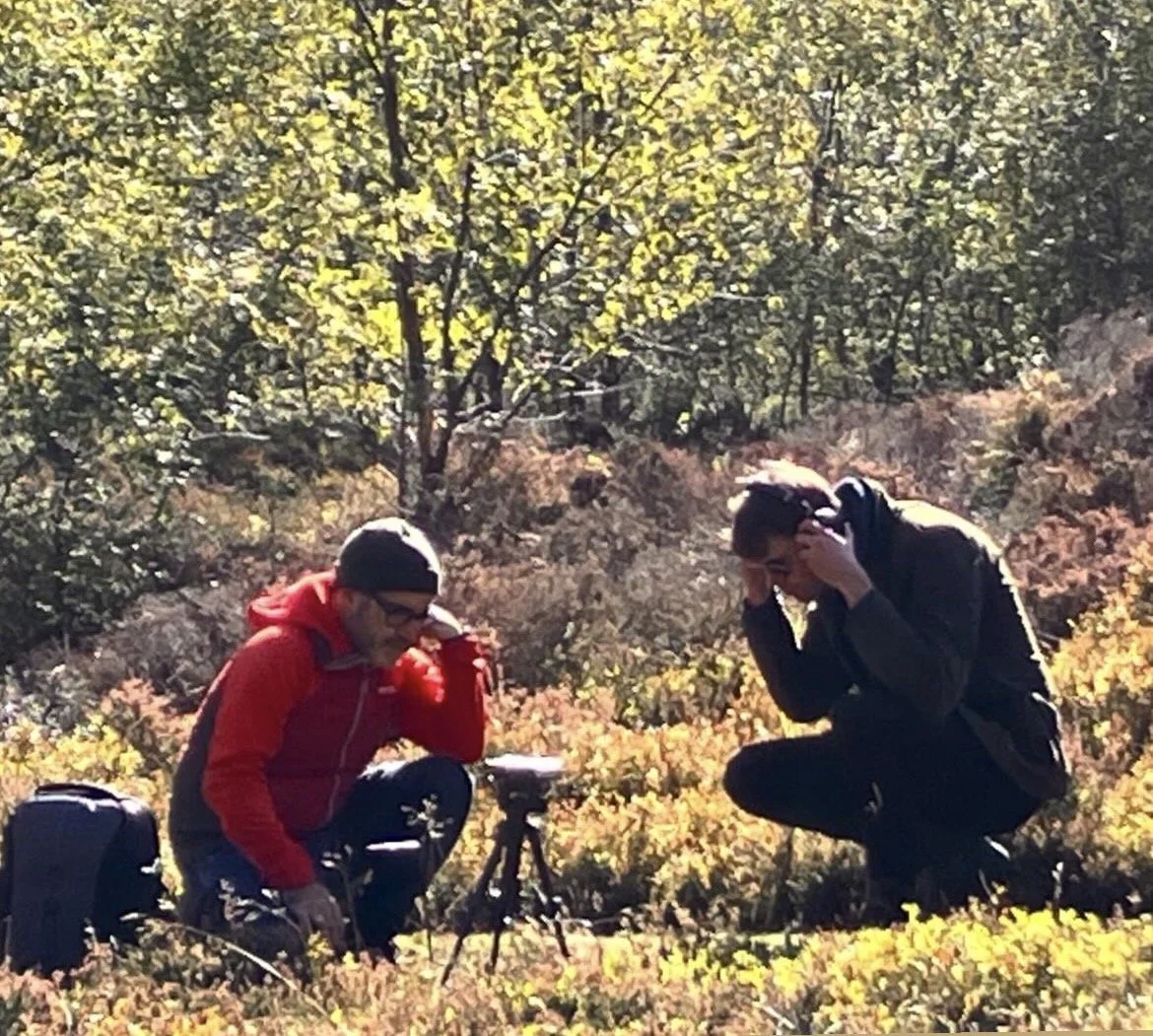
Paul Vivian & Shaun Holbrow
Affiliation: University of Salford
Shaun Holbrow, Independent researcher
After accurately locating water pipes through dowsing, Holbrow developed a deeper interest in detecting electromagnetic variations around ancient sites and ley lines. Over four years, he refined his practice across Britain’s stone circles and monuments, delivered talks, led workshops, and collaborated with Paul Vivian on an archaeoacoustic research project.
Paul Vivian, Artist and Academic
Following a 2023 encounter with airborne acoustic resonance at a Neolithic site in the Southern Lake District, Vivian’s work explores more than human acoustics at ancient monuments. Since 2025, he has collaborated with Shaun Holbrow merging acoustics and dowsing, with film and written work presented at festivals and symposia.
Panel: Experimental Archaeologies
Recent fieldwork at the Nine Ladies Stone Circle in Derbyshire explores how ritual landscapes operate as vibratory and affective environments that shape embodied experience and emotional wellbeing. Using an experimental, practice-based methodology that combines acoustic and seismic field recording with embodied folk practices in the form of dowsing, this research investigates how prehistoric sites may function as more-than-human assemblages co-produced by material forces, landscape energies, and human presence.
Building on the early archaeoacoustic research by Paul Devereux et all, the project extends resonance studies beyond human-centred ritual interpretation. It proposes that vibratory phenomena may persist as elemental properties of place, operating independently of human action. Field experiments undertaken in collaboration with dowser and independent researcher Shaun Holbrow reveal patterned resonant behaviours that echo findings from other stone circles across the UK, suggesting energetic “blueprints” embedded within the landscape itself.
Framed through contemporary materialist and post-human theory particularly Oliver J. T. Harris’s challenge to anthropocentric archaeology and Jane Bennett’s concept of vibrant matter. The paper argues that experimental archaeology and creative listening offer valuable frameworks for understanding ritual as a form of therapeutic and transformative practice. By foregrounding resonance, vibration, and material agency, ancient landscapes are reframed not as passive heritage sites, but as active participants in contemporary practices of care, connection, and radical self-care.