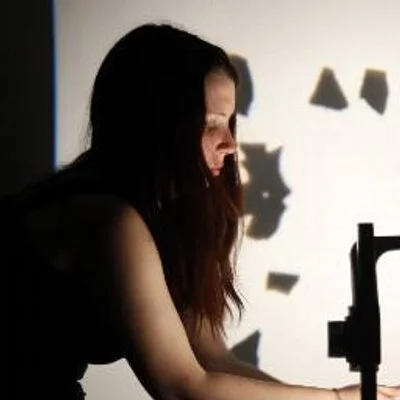
Hannah Singleton
Affiliation: Manchester Metropolitan University
Dr Hannah Singleton is a Senior Lecturer in the Department of Art and Performance within Manchester School of Art and Design. Recent work explores séance in contemporary art practice and archives of mediumship; the legacy of the Pendle Witches through the analysis of material culture, artworks and landscape; writing in development connects folk horror, objects, and craft within filmic landscapes. Her PhD research explored the physical and immaterial traces of performance and temporal artworks through alternative and artistic archival approaches. Member of the Dark Arts Research Kollective (DVRK) at MMU, alongside affiliate membership of the Manchester Centre for Gothic Studies research group.
Panel: Haunted Landscapes
Talk Title: Lancashire’s Corpse Path: memorialising the Pendle Witches within and through landscape
This paper explores the ways in which site-specific artworks, embodied research, and heritage trails can open up ways for audiences to remember and reflect upon the executions of alleged witches in the Lancashire landscape. Within this presentation I will share some of my own site based research and practice and also compare two works which were unveiled in 2012 (the 400th anniversary of the executions) Louise Ann Wilson Company's Ghost Bird, a performance based temporary artwork where the audience were directed on a walking route through the moorland, and the Pendle Witch Trail a durational walking/cycle route from Pendle to Lancaster which features ‘tercet markers’ along the route inscribed with lines from a poem by Carol Ann Duffy.
These artistic interventions offer an experience of the Pendle landscape for visitors which follows in the footsteps of the condemned, whilst negotiating a way in which to communicate this narrative in the present landscape. In each piece movement through rural Lancashire becomes a key part of the work, this sense of journey and displacement also being a key element of the trials themselves.
As observed by Dunn (2020) in relation to corpse paths (the traditional routes between rural places of death and consecrated graveyards), the ‘vernacular routeway’ offers up an opportunity for walkers to engage with folkloric customs whilst linking past and present landscapes through an embodied experience. In my own practice, walking, and writing, positioning this landscape as a corpse path has allowed for a connection to these traumatic histories through a physical presence: one that is part mourning ritual, part protest and occupation.
Reference
Dunn, S. (2020). Folklore in the landscape: the case of corpse paths. Time and Mind Vol. 13 Issue 3, pp. 245-265.